

On December 31, 2025, FinCEN finalized a two-year delay of its Anti-Money Laundering rule for investment advisers. The rule, adopted in 2024, adds certain registered investment advisers (RIAs) and exempt reporting advisers (ERAs) to the Bank Secrecy Act's definition of "financial institution." It requires covered advisers to establish an AML/CFT program, file suspicious activity reports (SARs) and keep related records. It was due to take effect on January 1, 2026; it now takes effect on January 1, 2028.
Why the delay
Treasury announced in July 2025 that it would postpone the rule while it reconsidered the rule's scope with the SEC. In the final rule, FinCEN said the extra time lets it ensure the rule is "effectively tailored to the diverse business models and risk profiles" of investment advisers. The amendment changes only the effective date. The rule's scope and substance remain in place for now, though changes are expected. Separately, the customer identification program (CIP) rule for investment advisers that FinCEN and the SEC proposed jointly has not been finalized, and FinCEN said it will consider the timing of the two together.
Why advisers shouldn't wait
Two years sounds like a long time, but an AML program is not a policy document that can be written the month before a deadline. It needs a risk assessment, customer due diligence and risk ratings, monitoring that can surface unusual activity, a process to investigate and document alerts, training and independent testing. Firms that start now can build those pieces deliberately, test them, and budget for them, instead of buying and implementing everything at once in late 2027.
Much of that groundwork is unlikely to change, whatever FinCEN decides about the final scope of the rule. As law firm Proskauer advises, advisers should recalibrate their timelines to 2028 while continuing to build the foundations, such as risk assessment frameworks, reporting lines and internal governance.
What RIAs can do in 2026 and 2027
- Complete a firm-wide AML risk assessment: clients, geographies, products, custodians and how money moves in and out.
- Define customer risk ratings and the due diligence each rating requires, including enhanced review for higher-risk clients.
- Decide what activity should trigger review, such as large or unusual transfers, rapid movement of funds, or activity inconsistent with a client's profile, and how each review will be documented.
- Name the person responsible for the program and the reporting line to senior management.
- Track FinCEN's revisions to the rule and the CIP rulemaking, and adjust the plan as they become final.
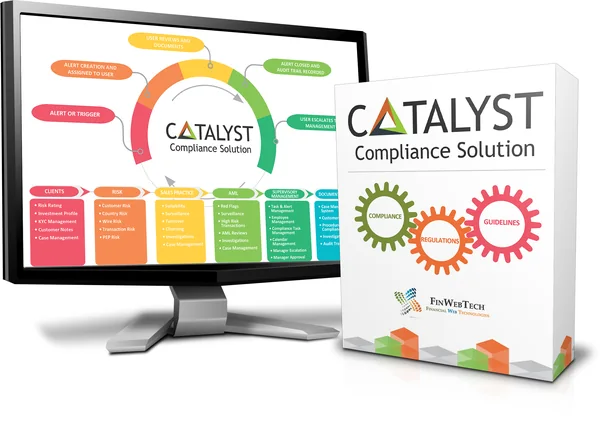
Catalyst already provides the tools an adviser's AML program will need: customer risk rating that feeds risk-based surveillance, AML and money-movement alerts, Know Your Customer onboarding records, case management and investigations with a full audit trail, and advisory rules built for investment advisers. Firms that put these in place now will meet the 2028 date with a program that has already been tested.
About FinWebTech
FinWebTech is a Service as a Software (SaaS) company developing compliance automation applications for the financial services industry. Its flagship product, Catalyst, provides automated AML and trade surveillance, customer risk rating, supervisory controls and task management, trade blotter management, case management, reporting and a document library. Catalyst was designed by an industry experienced Chief Compliance Officer, for compliance.
For more information on FinWebTech and Catalyst, please contact Don Lee at don.lee@finwebtech.com or 1-800-980-0959.
Sources